
Making Tax Digital (MTD) for Income Tax will expand from 6 April 2027 to sole traders and landlords with qualifying annual income over £30,000. Those affected will need to maintain digital records, use compatible software, submit quarterly updates to HMRC and complete an annual tax return.
For self-employed professionals, small business owners and landlords in London, preparing before April 2027 can make the transition easier.
Whether you operate a business in Golders Green, Finchley, Hampstead, Hendon or elsewhere in North London, understanding the new requirements is important.
Need help understanding your MTD and accounting responsibilities? Visit KNS Accountants to explore professional accounting and tax support in North London.
This guide explains who must comply with Making Tax Digital in 2027, how the £30,000 threshold works, the reporting deadlines and what steps you can take now.
What Is Making Tax Digital for Income Tax?
Making Tax Digital is an HMRC initiative designed to modernise the way businesses and individuals maintain records and report tax information.
Under Making Tax Digital for Income Tax, eligible sole traders and landlords must use compatible software to maintain digital records of their relevant income and expenses.
Instead of relying only on traditional annual Self Assessment reporting, they must also send quarterly updates to HMRC.
However, quarterly updates are not separate tax returns, and they do not create an additional quarterly Income Tax payment obligation.
The annual tax return and existing Income Tax payment arrangements remain in place.
When Does Making Tax Digital Become Mandatory?
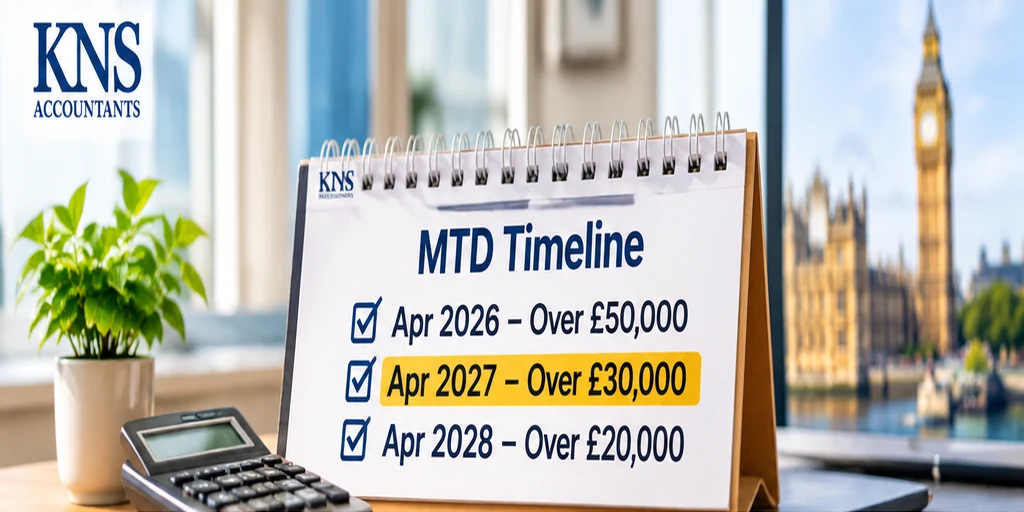
Making Tax Digital for Income Tax is being introduced in stages.
MTD Income Tax Thresholds: 2026, 2027 and 2028
| Start date | Qualifying annual income | Relevant income tax year |
|---|---|---|
| 6 April 2026 | Over £50,000 | 2024/25 |
| 6 April 2027 | Over £30,000 | 2025/26 |
| 6 April 2028 | Over £20,000 | 2026/27 |
The key change for 2027 is the reduction in the qualifying income threshold from £50,000 to £30,000.
This means more self-employed individuals and landlords will come within the MTD requirements.
Important: The threshold is based on qualifying gross income, not taxable profit after deducting business expenses.
Who Needs to Follow Making Tax Digital From April 2027?
You will generally need to use MTD for Income Tax from 6 April 2027 if:
- You are an individual registered for Self Assessment.
- You receive income from self-employment, property or both.
- Your qualifying income for the 2025/26 tax year exceeded £30,000.
- You are not covered by an applicable exemption.
Sole Traders in London
The changes may affect self-employed professionals such as:
- Freelance consultants.
- Graphic designers and digital marketers.
- Self-employed tradespeople.
- Independent retailers.
- Taxi and private-hire drivers.
- Freelance IT professionals.
- Other sole traders operating businesses in London.
For example, a self-employed consultant in Finchley with £38,000 of qualifying gross business income in 2025/26 would generally fall within the April 2027 MTD rollout.
Landlords in London
The rules may also apply to individuals receiving rental income from residential or commercial properties.
For example, a landlord receiving £36,000 in qualifying gross rental income during 2025/26 would generally need to comply from April 2027.
Landlords with properties in Hampstead, Golders Green, Hendon, Barnet and other London areas should review their rental income and record-keeping arrangements.
How Is the £30,000 MTD Income Threshold Calculated?
One of the most common questions is whether the £30,000 threshold applies to profit or turnover.
For MTD, qualifying income generally means gross income from self-employment and property before expenses and tax.
It can include income from multiple qualifying sources.
Example 1: Sole Trader
| Description | Amount |
|---|---|
| Annual business turnover | £42,000 |
| Business expenses | £14,000 |
| Business profit | £28,000 |
| Qualifying income for MTD | £42,000 |
Although the business profit is £28,000, the qualifying income is £42,000.
The individual would generally be within the April 2027 rollout if these figures relate to 2025/26.
Example 2: Sole Trader and Landlord
| Income source | Gross annual income |
|---|---|
| Self-employment income | £19,000 |
| Property rental income | £17,000 |
| Total qualifying income | £36,000 |
The combined qualifying income is £36,000, exceeding the £30,000 threshold.
The individual would generally need to use MTD from April 2027.
Which Income Does Not Normally Count?
Other sources of income are generally excluded from the qualifying income calculation, including employment income taxed through PAYE, dividends and pensions.
Specific rules apply to certain property arrangements and other circumstances.
What Changes for Sole Traders and Landlords in 2027?
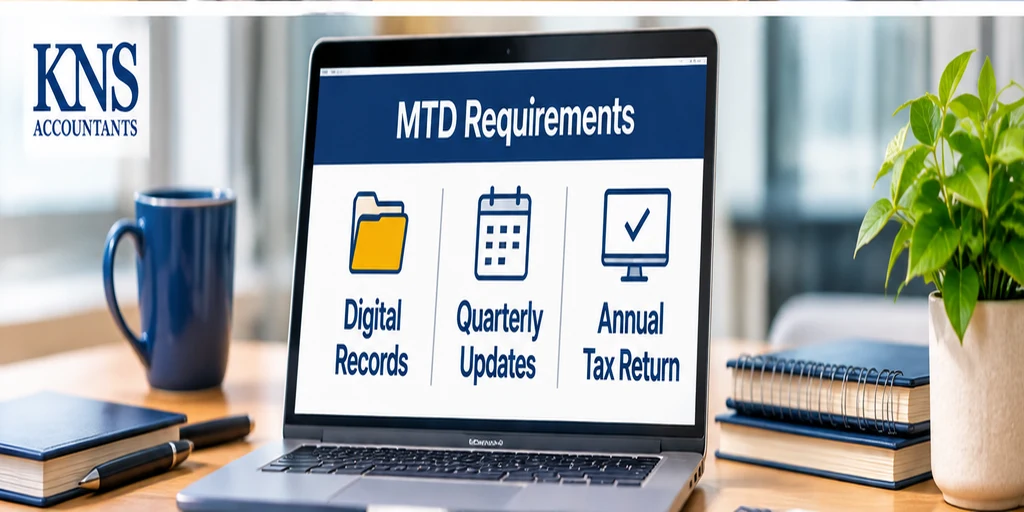
The main changes concern record keeping, reporting and software.
1. Digital Record Keeping
Eligible individuals must maintain digital records of their relevant business or property income and expenses.
Records should be accurate, organised and maintained using a suitable digital system.
2. MTD-Compatible Software
You must use software compatible with HMRC’s MTD for Income Tax requirements.
Depending on your circumstances, this could involve accounting software or a suitable spreadsheet system connected through compatible bridging software.
3. Quarterly Updates
Instead of reporting relevant income and expenses only through an annual tax return, you must submit quarterly summaries to HMRC.
4. Annual Tax Return
You must still complete an annual tax return, including relevant adjustments and other taxable income.
MTD does not remove the requirement to finalise your annual Income Tax position.
Making Tax Digital 2027: Quarterly Reporting Deadlines
For individuals using standard tax-year update periods, the first reporting cycle will begin on 6 April 2027.
MTD Quarterly Update Deadlines for 2027/28
| Quarterly update period | Submission deadline |
|---|---|
| 6 April – 5 July 2027 | 7 August 2027 |
| 6 April – 5 October 2027 | 7 November 2027 |
| 6 April 2027 – 5 January 2028 | 7 February 2028 |
| 6 April 2027 – 5 April 2028 | 7 May 2028 |
Each standard update covers the year to date, rather than just the most recent three months.
Calendar update periods may also be available.
The annual tax return for 2027/28 will generally be due by 31 January 2029.
What Software Do You Need for Making Tax Digital?
MTD-compatible software must support the relevant digital record-keeping and reporting requirements.
When selecting software, consider whether it can:
- Record income and business expenses.
- Maintain digital property income records.
- Send quarterly updates to HMRC.
- Support the annual tax return process.
- Handle multiple relevant income sources.
- Provide appropriate access for an accountant or tax agent.
There are both free and paid software options.
Before choosing a system, check HMRC’s current list of compatible software and consider your reporting needs.
Professional bookkeeping support can also help maintain organised digital records throughout the year.
Do Landlords Need Different Records From Sole Traders?
Although both groups fall within MTD for Income Tax, their records reflect different types of activity.
Sole Trader Records
A sole trader may need to maintain records of:
- Sales and service income.
- Business purchases.
- Operating expenses.
- Invoices and receipts.
- Relevant adjustments.
Landlord Records
A landlord may need to maintain records of:
- Rental income.
- Property maintenance costs.
- Letting agent fees.
- Insurance expenses.
- Relevant finance costs.
- Other allowable property expenditure.
Where an individual has both self-employment and property income, separate reporting information may be required for the different activities.
Making Tax Digital vs Traditional Self Assessment
| Feature | Traditional Self Assessment | MTD for Income Tax |
|---|---|---|
| Record keeping | Paper or digital records may be used | Digital records required |
| Reporting frequency | Generally annual tax return | Quarterly updates plus annual tax return |
| Software | Online HMRC services or other permitted methods | Compatible MTD software |
| Tax payment | Existing Income Tax deadlines | Existing Income Tax deadlines |
| Annual tax return | Required where applicable | Still required |
| Quarterly tax payments | Not introduced by Self Assessment reporting | Not introduced by MTD updates |
MTD changes the reporting process, but it does not create a new tax or automatically change how much Income Tax an individual owes.
Does Making Tax Digital Apply to Limited Companies?
Making Tax Digital for Income Tax primarily concerns eligible individuals receiving self-employment and property income.
A limited company’s turnover does not automatically count as a director’s personal qualifying income.
Limited companies have separate Corporation Tax and accounting obligations, while VAT-registered companies are already subject to applicable MTD for VAT rules.
If you are deciding whether to operate as a sole trader or incorporate, read our guide:
Sole Trader vs Limited Company in London: What’s the Difference?
The choice of business structure should take account of tax, liability, administration and commercial requirements, rather than MTD alone.
What Happens If You Miss an MTD Deadline?
MTD for Income Tax uses a points-based late submission penalty system.
From April 2027, missing a quarterly update deadline can result in a penalty point.
For taxpayers subject to quarterly reporting, reaching four penalty points can result in a £200 financial penalty.
Further penalties may apply for continued non-compliance, and separate rules govern late payment.
The 2026/27 tax year has transitional treatment for late quarterly updates, but that should not be assumed to apply to the April 2027 intake.
Are There Any Exemptions From Making Tax Digital?
Some individuals may qualify for exemptions.
For example, an exemption may be available where someone is digitally excluded because using digital tools is not reasonably practicable due to factors such as disability, age, location or religious beliefs.
Exemptions are subject to HMRC’s rules and procedures.
Being unfamiliar with accounting software does not automatically mean someone qualifies for an exemption.
If you believe an exemption applies, review HMRC’s guidance before your MTD start date.
How to Prepare for Making Tax Digital 2027: Step-by-Step Checklist
Step 1: Check Your Qualifying Income
Review your 2025/26 Self Assessment information and calculate the relevant gross self-employment and property income.
Step 2: Confirm Your MTD Start Date
Check whether your income exceeds the relevant threshold and whether any exemption applies.
Step 3: Review Your Existing Records
Identify whether you currently rely on paper records, spreadsheets or accounting software.
Step 4: Choose Compatible Software
Select a system that supports your business or property reporting requirements.
Step 5: Organise Your Bookkeeping
Make sure your income and expenses can be recorded consistently and accurately.
Step 6: Register for MTD
Follow HMRC’s sign-up process before your mandatory start date. An authorised agent can assist with registration.
Step 7: Prepare for Quarterly Reporting
Set reminders for your reporting deadlines and establish a process for reviewing your records regularly.
Preparing before April 2027 can reduce the amount of work required when your first quarterly update becomes due.
Why Making Tax Digital Matters for London Small Businesses
London sole traders and landlords often manage several responsibilities, including customers, suppliers, property maintenance and financial administration.
MTD introduces a more structured digital reporting process.
Maintaining current financial records may also make it easier to:
- Review income and expenditure.
- Monitor business or property finances.
- Identify missing documents.
- Prepare annual tax information.
- Discuss financial performance with an accountant.
However, adopting digital software may involve additional costs, training and administrative work, particularly for individuals who previously maintained paper records.
How Can KNS Accountants Help With Making Tax Digital?
KNS Accountants is an ACCA-regulated firm of Chartered Certified Accountants based in Golders Green, North London.
The firm provides accounting, bookkeeping and taxation services to individuals and businesses.
Sole traders and landlords preparing for MTD may benefit from professional assistance in understanding qualifying income, organising records, reviewing reporting requirements and selecting an appropriate accounting process.
KNS Accountants is based at 925 Finchley Road, London NW11 7PE, and serves clients across North London and the wider London area.
Final Thoughts: Get Ready for Making Tax Digital 2027
Making Tax Digital 2027 is an important change for sole traders and landlords across London.
From 6 April 2027, eligible individuals with qualifying income over £30,000 will need to maintain digital records, submit quarterly updates and complete their annual Income Tax reporting through compatible software.
The most useful preparation is to check your qualifying income, confirm your start date, organise your records and choose suitable software before the new requirements begin.