
Sole Trader vs Limited Company in London: What’s the Difference? (2026 Guide)
Starting a business in London involves several important decisions, and choosing between operating as a sole trader or a limited company is one of the first.
Both structures allow you to run a business legally in the UK, but they have different rules for taxation, personal liability, bookkeeping, registration and financial reporting.
The main difference is that a sole trader and their business are legally the same person, while a limited company is a separate legal entity from its owners. Sole traders generally have fewer administrative responsibilities, whereas limited companies offer limited liability protection and a different approach to business taxation.
If you are starting a business in North London, this guide explains the key differences, advantages, disadvantages and accounting requirements to help you understand which structure may be more suitable.
What Is a Sole Trader?
A sole trader is a self-employed individual who owns and operates a business in their own name or under a trading name.
It is one of the simplest ways to start a business in the UK.
As a sole trader, you control the business, make decisions independently and keep the profits after paying the relevant taxes.
However, you are personally responsible for the business’s debts and legal obligations.
Advantages of Being a Sole Trader
Simple and generally free to establish.
Fewer administrative requirements than a limited company.
Full control over business decisions.
No requirement to file annual accounts with Companies House.
Business profits belong to the owner, subject to tax.
Disadvantages of Being a Sole Trader
Unlimited personal liability for business debts.
Potentially greater personal financial exposure.
Less flexibility when bringing in equity investors.
Income Tax and National Insurance may apply to business profits.
Some customers or commercial clients may prefer dealing with incorporated businesses.
Sole trader status is often considered by freelancers, consultants, tradespeople and individuals starting small businesses.
What Is a Limited Company?
A limited company is a separate legal entity registered with Companies House.
It can enter into contracts, own assets, employ staff and conduct business independently of its shareholders.
Most small businesses choosing incorporation establish a private company limited by shares.
A limited company must have at least one director and one shareholder, although the same person can fulfil both roles.
Advantages of a Limited Company
Shareholders generally benefit from limited liability.
The business has a separate legal identity.
Shares can provide a structure for ownership and investment.
Profits may be retained within the company for future business needs.
A company structure can support certain business growth and succession arrangements.
Disadvantages of a Limited Company
More administrative and reporting responsibilities.
Annual accounts and confirmation statements must be filed.
Company information is published on the Companies House register.
Directors have statutory responsibilities.
Professional accounting and compliance costs may be higher.
If you are considering incorporation, read our detailed guide: How to Set Up a Limited Company in London: Step-by-Step Guide.
Sole Trader vs Limited Company: Key Differences
The following table compares the two structures for businesses operating in London.
| Feature | Sole Trader | Limited Company |
|---|---|---|
| Legal identity | Same as the individual | Separate legal entity |
| Registration | HMRC Self Assessment when required | Companies House |
| Ownership | One individual | One or more shareholders |
| Personal liability | Generally unlimited | Generally limited, subject to exceptions |
| Business tax | Income Tax and National Insurance | Corporation Tax |
| Taking profits | Owner can withdraw business funds | Salary, dividends or other permitted payments |
| Annual accounts | No Companies House filing | Companies House filing required |
| Financial records | Required | Required |
| Public company information | No equivalent Companies House company register | Certain details publicly available |
| Administration | Generally simpler | More extensive |
| Investors | Cannot issue company shares | Can issue shares |
| Business continuity | Closely linked to owner | Separate legal existence |
Both structures have benefits and limitations. The appropriate choice depends on the business’s circumstances.
1. Sole Trader vs Limited Company: Tax Differences in 2026/27
Taxation is an important consideration when choosing a business structure.
Sole traders and limited companies are taxed differently.
Sole Trader Tax in the UK
Sole traders generally pay Income Tax on their taxable business profits, together with National Insurance contributions where applicable.
For the 2026/27 tax year (6 April 2026 to 5 April 2027), the standard Income Tax rates for non-savings income in England are:
| Income Tax band | Taxable income | Rate |
|---|---|---|
| Personal Allowance | Up to £12,570 | 0% |
| Basic rate | £12,571–£50,270 | 20% |
| Higher rate | £50,271–£125,140 | 40% |
| Additional rate | Over £125,140 | 45% |
The Personal Allowance reduces by £1 for every £2 of adjusted net income above £100,000.
Self-employed National Insurance contributions may also apply.
These thresholds relate to taxable income and assume entitlement to the standard Personal Allowance.
Limited Company Tax in the UK
Limited companies generally pay Corporation Tax on their taxable profits.
For the financial year beginning 1 April 2026, the standard Corporation Tax framework includes:
| Company taxable profits | Corporation Tax treatment |
|---|---|
| £50,000 or less | 19% small profits rate, where eligible |
| Between £50,000 and £250,000 | Marginal Relief may apply |
| £250,000 or more | 25% main rate |
The profit thresholds can be reduced where a company has associated companies or a shorter accounting period.
Directors and shareholders may also have personal tax liabilities when receiving salary or dividends.
For 2026/27, the dividend allowance is £500. Dividend tax rates above the allowance are 10.75% for basic-rate taxpayers, 35.75% for higher-rate taxpayers and 39.35% for additional-rate taxpayers.
Important: A limited company does not automatically result in a lower overall tax bill. The total position depends on company profits, salaries, dividends, other income, National Insurance and how much profit is retained in the business.
2. Personal Liability: Which Business Structure Offers More Protection?
One of the most significant differences concerns personal financial responsibility.
Sole Trader Liability
A sole trader is personally responsible for business debts.
If the business cannot pay its creditors, the owner’s personal assets may be at risk.
Appropriate insurance and careful financial management are therefore important considerations.
Limited Company Liability
A limited company has its own legal identity.
Shareholders are generally liable only for unpaid amounts on their shares.
However, limited liability does not provide complete protection in every situation. Directors may become personally responsible in certain circumstances, including personal guarantees or breaches of legal duties.
3. Accounting and Bookkeeping Requirements

Both sole traders and limited companies must maintain accurate financial records.
However, limited companies generally face more extensive accounting and reporting obligations.
Sole Trader Accounting
Sole traders usually need to:
Record business income and expenses.
Maintain supporting invoices and receipts.
Calculate taxable business profits.
Submit Self Assessment returns when required.
Maintain records for HMRC.
Limited Company Accounting
Limited companies generally need to:
Maintain company accounting records.
Prepare annual statutory accounts.
File accounts with Companies House.
Submit Company Tax Returns to HMRC.
Manage payroll and dividend records where relevant.
Submit confirmation statements.
Professional accounting services in London can support businesses with financial reporting and ongoing compliance responsibilities.
Similarly, accurate bookkeeping services in London can help maintain organised transaction records throughout the financial year.
4. Business Registration: Sole Trader vs Limited Company
The registration process differs between the two structures.
How to Register as a Sole Trader
If you are starting self-employment, you may need to register for Self Assessment with HMRC.
Generally, you must register if you earn more than £1,000 in gross self-employment income during a tax year, although other circumstances can also require registration.
You do not need to register your business with Companies House simply to operate as a sole trader.
How to Register a Limited Company
A limited company must be incorporated with Companies House.
The process generally involves:
Choosing an available company name.
Appointing directors and shareholders.
Identifying people with significant control.
Providing a registered office address.
Preparing incorporation details.
Completing applicable identity verification requirements.
Submitting the incorporation application.
The standard online Companies House incorporation fee is £100 as of October 2026.
5. Sole Trader vs Limited Company: Which Has Lower Running Costs?
Sole traders generally have lower administrative costs because they have fewer statutory reporting obligations.
Limited companies may incur additional costs for company administration, annual accounts, Corporation Tax returns, payroll and professional support.
However, the actual costs depend on the size and complexity of the business.
When comparing accountants, consider the work included in the quoted fee rather than choosing solely on price.
Our guide on how to choose an accountant in London explains the questions worth asking before appointing an accounting firm.
6. Making Tax Digital: What Sole Traders Need to Know
Making Tax Digital (MTD) for Income Tax is changing how eligible sole traders report their income to HMRC.
The rollout includes:
From 6 April 2026: Eligible sole traders and landlords with qualifying income above £50,000.
From 6 April 2027: Eligible sole traders and landlords with qualifying income above £30,000.
From 6 April 2028: A further planned expansion to qualifying income above £20,000.
Qualifying income is generally based on gross self-employment and property income rather than business profit.
Eligible individuals must use compatible software to maintain digital records and provide the required updates to HMRC.
Limited companies are not brought into MTD for Income Tax simply because their directors receive company income. Separate rules apply to company accounting and tax reporting.
7. Can You Change From Sole Trader to Limited Company?
Yes. Many business owners begin as sole traders and later decide to incorporate.
However, changing structures is not simply a matter of updating a business name.
You may need to:
Register a new limited company.
Transfer business assets and contracts where appropriate.
Review VAT registration requirements.
Establish company banking arrangements.
Update customer and supplier details.
Consider tax implications of transferring the business.
Maintain separate records for the company.
Obtaining professional advice before transferring an existing business can help you understand the legal and tax consequences.
8. Which Is Better for a Small Business in London?
There is no single answer for every business.
When a Sole Trader Structure May Be Suitable
A sole trader structure may be worth considering if:
You are starting a small business independently.
You want relatively simple administration.
Your business has limited financial exposure.
You do not need to issue shares to investors.
You prefer direct ownership and control.
When a Limited Company May Be Suitable
A limited company may be worth considering if:
You want a separate legal identity.
You need a share-based ownership structure.
You intend to bring in investors.
You want to retain profits within the business.
You are prepared for additional reporting responsibilities.
The most appropriate structure depends on your circumstances, not simply on how much your business earns.
9. Why Choose KNS Accountants for Your London Business?
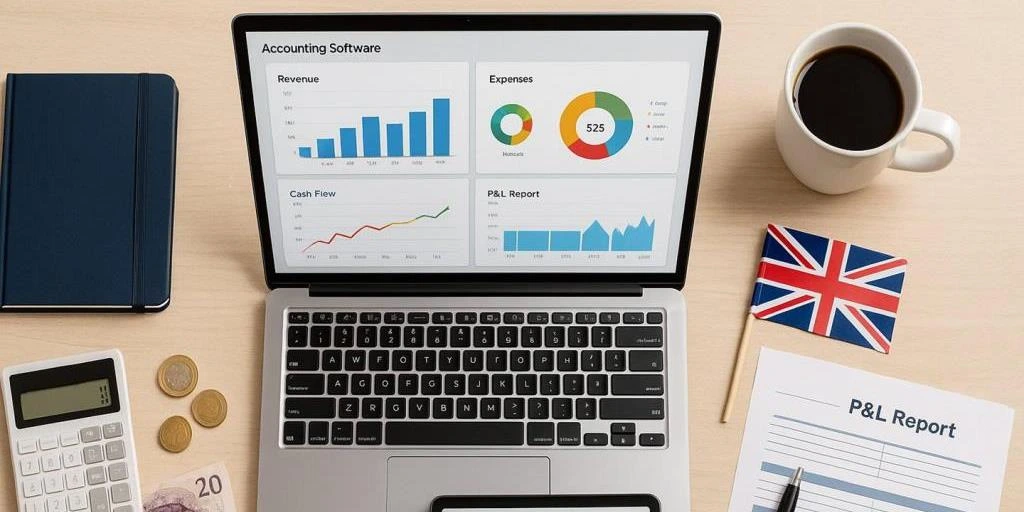
KNS Accountants is an ACCA-regulated firm of Chartered Certified Accountants based in Golders Green, North London.
The firm provides accounting, bookkeeping, taxation and related business services to individuals and businesses.
For sole traders and limited company owners, understanding financial records, reporting requirements and tax obligations is an important part of managing a business.
KNS Accountants serves clients across North London, including Golders Green, Finchley, Hendon, Hampstead, Temple Fortune, Cricklewood and surrounding areas.